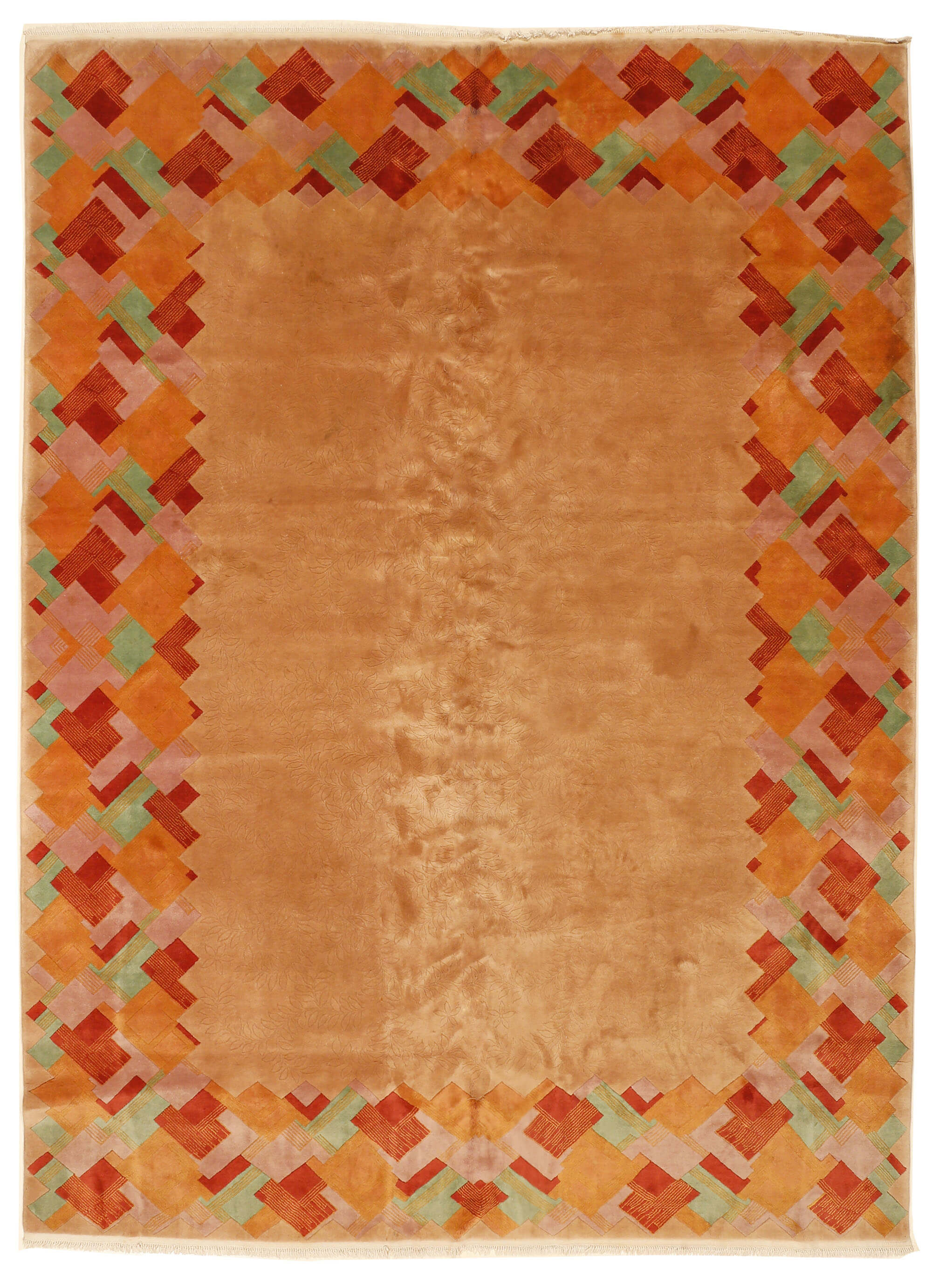
Chinese Art Deco Carpet
N°
00261
Period
Circa 1930
Artist
Nichols & Co.
Origin
Tianjin, Northern China
Status
Available
Size
410 cm x 300 cm13'5" x 9'10"
Materials
Wool
Only a very limited group of the carpets woven during the thirties at the Tianjin city looms are decorated by geometric patterns typical of the Art Deco period. Some of these rare pieces are known to be designed by artists such as Betty Joel, who would then commission the weaving to American companies such as Nichols, which were based in China. These sturdy, hardwearing carpets are now highly appreciated for their abstract compositions and are extremely well suited in the interiors employing twentieth century design furniture.
E. Bogen, ‘What the Wool Trade Wrought – Rug-making in Early 20th Century Tianjin’, Hali, Issue 118 (London, September-October 2001): 102-105.